 NewMusic
 TRACK
Sound
An Astrobiologist Pieces Together How Life Started, with Betül Kaçar
1:05:33 duration0 plays0 favoritesMedium quality
Play now
About this track
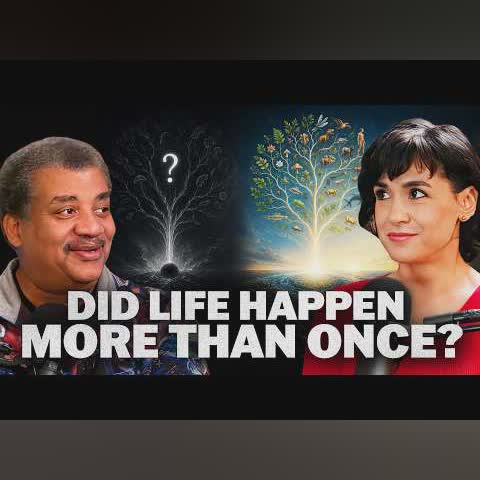
👽 If aliens showed up tomorrow, would we be ready? 👀 Order Take Me to Your Leader here 👇 https://www.simonandschuster.com/books/Take-Me-to-Your-Leader/Neil-deGrasse-Tyson/9781668249970 What are the true limits of life, will we even recognize it when we see it? Neil deGrasse Tyson and comic co-host Chuck Nice explore the beginnings of life on Earth and what they might tell us about life everywhere else with astrobiologist and bacteriologist, Betül Kaçar. We learn how Betül's lab resurrects ancient enzymes, reconstructing the molecular machinery of organisms that lived billions of years ago to understand how life first emerged and how it survived. Why does all life on Earth have DNA? Why did life seemingly arise only once? We explore the idea that certain moments in life's history--the origin of life itself, the emergence of photosynthesis, the invention of nitrogen fixation--were singular events that each completely transformed the planet, and without any one of them, we simply wouldn't be here. How rare are these events? We explore how important nitrogen fixation was in the progression for life. Learn about a single ancient enzyme, still in use today, that breaks one of the strongest chemical bonds in nature to pull nitrogen from the atmosphere and make it available to living cells. We compare energy consumption, the Haber-Bosch process and biological nitrogen fixation and what would happen if all biological nitrogen fixation came to a halt. From there we dig into extremophiles and what they suggest about life's potential elsewhere in the universe. What does an enzyme actually do? What is a eukaryote and why does it matter? Could silicon replace carbon as the backbone of life on another world? We close on the big questions: how contingent was life's path on Earth? Could it have gone differently? Is there a last universal common ancestor, or is the tree of life just a metaphor we invented to make sense of something far messier? As Betül puts it, we know less than we think we do, and that's exactly why it's wo
From the album
 StarTalk Podcast30 tracks · Track 21
...
→More By StarTalk





You may also like


