NewMusic

 TRACK
Sound
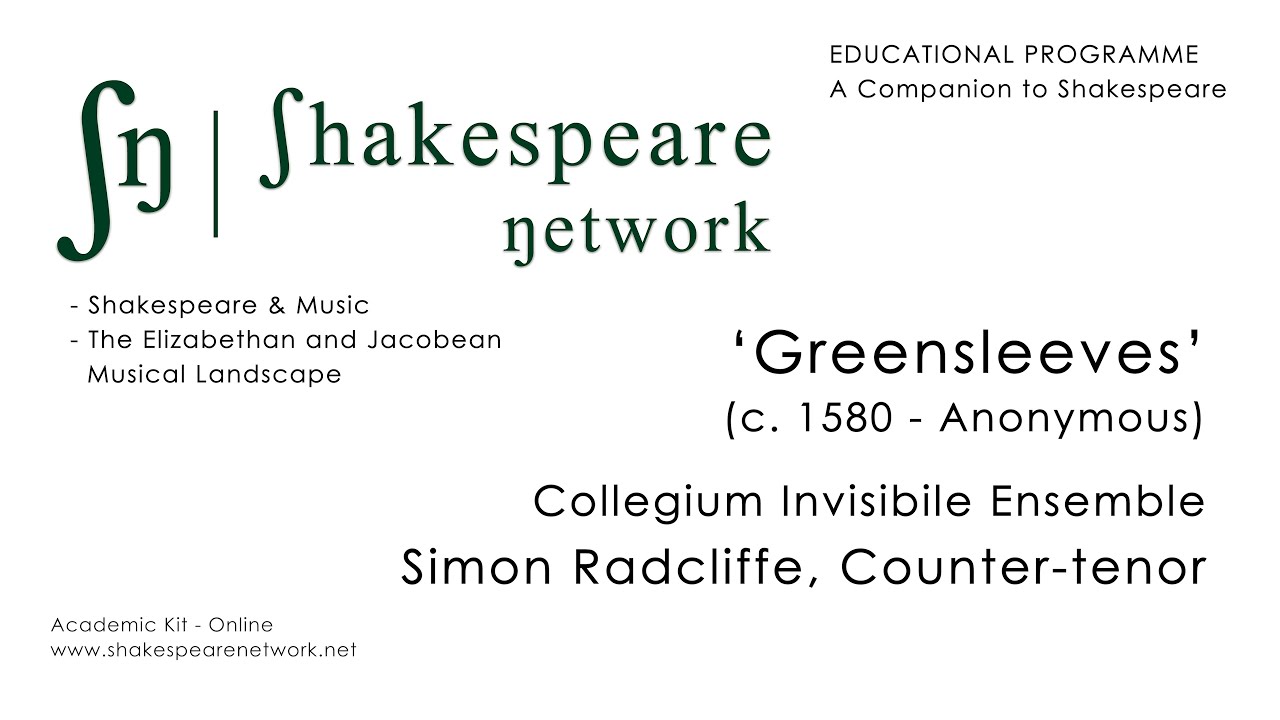
Greensleeves - Simon Radcliffe - Counter-tenor - Collegium Invisibile - 2025 - 4K
laurakingnchama
3:34 duration0 plays0 favoritesMedium quality
Play now
About this track
🎵 🍃💧Shakespeare & The Elizabethan - Jacobean Music Landscape - Attributing this work as "Anonymous" remains the most rigorous academic standard for the Elizabethan era. While history preserves the names of the printer Richard Jones, who first registered the lyrics in 1580, and the compiler Clement Robinson, who included them in A Handful of Pleasant Delights (1584), the original creator remains unknown. This production acknowledges the William Ballet Lute Book (c. 1590) as providing the first known musical score, confirming that the melody is built upon an Italian harmonic framework known as the passamezzo antico. This musicological evidence successfully debunks the popular myth of Henry VIII’s (1491–1547) authorship, as this Italian style did not gain prominence in England until decades after his death. Throughout the late sixteenth and early seventeenth centuries, playwrights utilised ‘Greensleeves’ as a semiotic shorthand for social and moral states. William Shakespeare (1564–1616) famously employed the tune in The Merry Wives of Windsor (c. 1597) to highlight the discordance between Falstaff’s predatory intent and his claims of devotion. This dramaturgical tradition was extended by Thomas Middleton (1580–1627) in A Mad World, My Masters (c. 1605), where the song underscored themes of deception, and by Ben Jonson (1572–1637) in The Staple of News (1626), where it represented the "common" noise of a burgeoning consumerist London. Under the musical and literary direction of Maximianno Cobra, this performance by counter-tenor Simon Radcliffe explores the professional realities of the Renaissance vocal landscape. Due to the Pauline doctrine and its enforcement by Pope Paul IV (Gian Pietro Carafa, 1476–1559), professional singing was an exclusively male craft; Radcliffe’s use of the counter-tenor register provides a bridge to this "chamber" aesthetic, prioritising rhetorical clarity and the "white," instrumental tone prized by the Elizabethan ear. While this production honours specific historical performance prac
From the album
 A doll'S House102 tracks · Track 35
Shakespeare Network - NPO - The Complete Works - Modern Critical editions - Folio & Quarto Facsimile...
→You may also like